
There are many reasons why some of us take a break from skiing – not all of them voluntarily: stress at work, children keeping us busy, financial considerations or a change of residence that makes it difficult to get to the nearest ski resort in winter... And even if we don't like to think about it, accidents and injuries can also force us to take an unwanted break from winter sports. Whatever the reason for your break, it's never too late to get back to skiing!
To help you get back on the slopes, we have put together some useful tips in this article that cover the right exercises, the right equipment and the correct approach. After all, it would be a shame if you had to miss out on the next few days of fresh snow!
Can you forget how to ski?
Don't worry! You can't completely forget how to ski - you'll retain many of the movements and feel for the skis. After a long break, it's often just a lack of routine and confidence. It's important to be patient and not jump right into the black slopes. With a little practice, the right technique and, if necessary, a quick refresher course, you'll be back in the groove before you know it. We've put together a few tips for you below.
Our tips for returning skiers
Be aware that you will not be able to ski at the same level as when you stopped a few years ago. Especially if an injury was the reason for your break, you should give yourself time and put some energy into proper preparation.
That's why we've put together a guideline for those returning to skiing...
Tip 1: Take your time!
Go fast or go home? All or nothing? We strongly advise against it! The most important rule for a returning skier is: Take it slow! A hasty comeback to the black slopes is absolutely not advisable, especially after an accident. If a serious injury was the reason for the break, it is advisable to consult your doctor. They can give you a green light or inform you about possible risks.
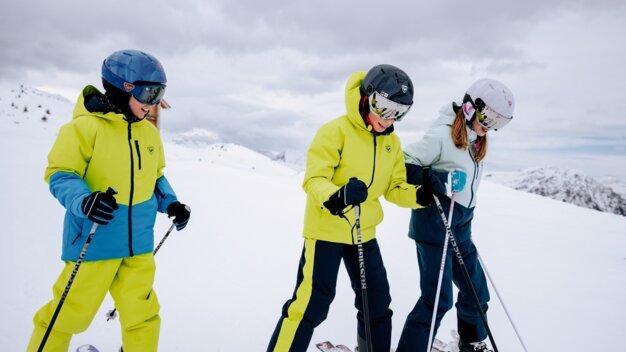
So in the beginning, it's better to focus on easy slopes. But look on the bright side: You have more time to enjoy the view. For example, choose a ski resort with lots of blue slopes. This might take you to an area you have never considered before.
Tip 2: Ski exercises – get in shape for your return to the slopes!
You don't have to be a marathon runner to ski. But it doesn't hurt to work on your fitness and endurance to prepare your body for muscular exertion. Even if you make it to the top in a gondola, the descent takes a lot of strength - a long day in the snow can be exhausting.
Special skiing exercises will help you prepare optimally. We recommend a combination of cardio, core and balance exercises as well as upper and lower body workout to get you back in shape. How about starting with some light endurance training such as walking or jogging?
Once you have reached a certain basic level of fitness, you can begin with gentle rehabilitation exercises. The examples below will help you train the muscle groups that are primarily used in skiing.
Our Tip: Remember to warm up before your workout!
The best exercises to get in shape for the slopes:
… for your lower body
- squats (15 sets, 5 reps)
- lunges (15 sets, 5 reps)
- leg curls (15 sets, 5 reps)
… for your hamstrings
- bridge (hold for 30 seconds, 5 reps)
- single leg bridge (hold for 5 seconds, 5 reps for every leg)
- leg curls (15 sets, 5 reps)
… for your buttocks
- donkey kicks with elastics (15 sets, 3 reps)
- squats with hip abduction
… for your thigh muscles
- knee bends (optionally with a wobble board)
… for your core muscles
- sit-ups
- planks (hold for 1–2 minutes)
Tip: Feel like you need to do more? Then we have a more detailed plan for you: Fit for the slopes: How to train for the ski season!
Tip 3: Old gear or new ski equipment?
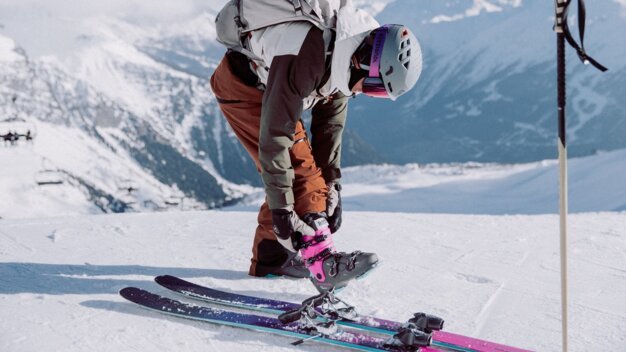
In addition to being sufficiently fit, it also helps to use professional equipment when returning to the slopes. After all, every discipline has its own characteristics, and with skis that are tailored to these specific requirements, you will immediately feel much safer. Before investing in the best expensive gear, take advantage of the rental options offered by INTERSPORT Rent. The experts on site will help you choose the right models from several well-known manufacturers.
We have also collected some of our blog posts on choosing the right equipment. The better you know your needs, the better you can formulate your requirements.:
- Which carving ski is right for me?
- How to find the right ski length
- The right length for your ski poles
- Basic knowledge about ski boots
- Why flex is important in ski boots
Tip: The answer to the question of whether it is better to buy or rent skis depends largely on how often and how intensively you use them, as well as your individual requirements in terms of equipment.
Tip 4: Old skiclothing or new layers?
Getting back on the slopes means you need the right gear. Functional ski underwear is especially important because it wicks moisture away from your body and keeps you dry. A warm mid layer will also help maintain your body temperature without the risk of getting cold. It is also worth investing in modern materials for ski jackets and trousers. However, if you are unsure or only ski occasionally, many INTERSPORT Rent shops offer suitable rental options without having to replace your entire wardrobe.
In addition, we have compiled some of our guides on choosing the right clothing:
Tip 5: Don't forget your safety gear!
This should go without saying: Never hit the slopes without safety equipment! Especially if you're getting back into skiing, the right gear can give you the confidence you need. After all, you don't want to come home from your ski holidays with an injury and have to take another forced break.
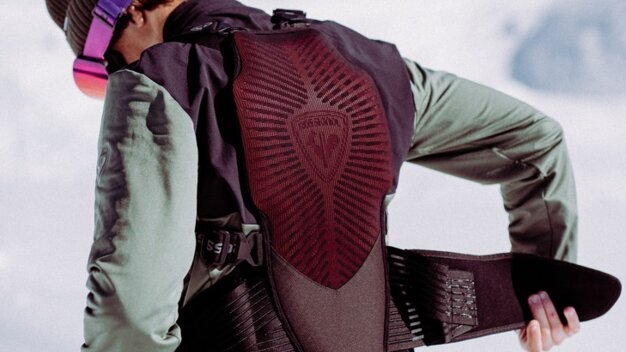
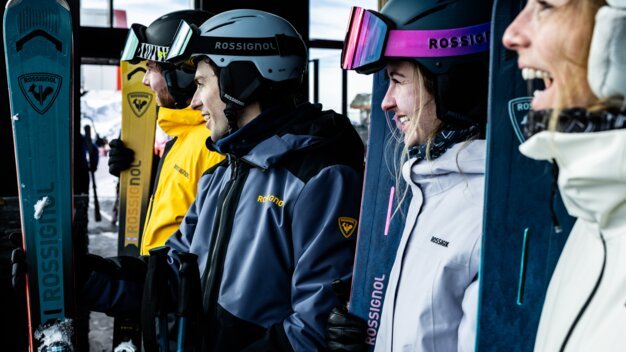
Basic equipment includes:
- A high-quality helmet
- Appropriate protective gear
- A fully charged mobile phone
- A first aid kit
Tip 6: Keep at it!
If you've taken a long break from skiing, you need to get used to the fact that a whole day in the snow can be pretty exhausting. So when you come back, don't expect your return to be 100% perfect straight away. Celebrate the small successes at the beginning. Take your time, go slow and reward yourself for your first steps! Because let's be honest: You probably missed the food at the hut just as much as the skiing itself, right?
If you stick to the motto ‘slowly but surely’, you will stay motivated in the long term, reduce the risk of injury and soon be back on track with your usual enthusiasm!
Tip 7: Ski course or self-initiative?
If you are getting back into skiing, a course with an experienced ski instructor is often a better choice than brushing up on your skills on your own. Professional trainers can give you valuable tips on technique, help you avoid old mistakes, and ensure that you are safely back on your skis in no time. What's more, a ski course not only improves your skiing skills, but also increases the fun factor - because with guidance, progress is usually much faster.
If you prefer to practise on your own, you should choose a ski resort with plenty of easy slopes in advance. Give yourself the time you need to get started and build your confidence step by step.
Frequently asked questions about skiing for returners
Can you still learn to ski at 40?
Of course you can still learn to ski at 40 (or later) – or start again after a long break! Especially for those returning to skiing, it's less about age and more about proper preparation and your individual pace. With modern ski equipment, ski lessons and specific exercises, you'll quickly regain your confidence and enjoy winter sports. It's important to start slowly - listen to your body.
Is skiing easy to relearn?
Yes, relearning how to ski is often easier than you think. Many of the movements and the feel for snow and skis will seem familiar, and you will be able to reactivate them after a short period of familiarisation. Starting on flat slopes will help. A refresher course with a professional instructor is also a good idea. This will quickly restore your confidence and self-esteem – and you will soon be enjoying skiing again.
Do I need new equipment to start skiing again, or can I use my old gear?
If your equipment is a few years old, it's worth checking its condition before you start skiing again, as materials and technologies are constantly evolving. Modern skis tend to be more comfortable - ideal for getting back into the swing of things after a break. Ski boots are also improving in fit and control. The latest models will help you regain your technique and confidence faster.
INTERSPORT Rent tip
The RENTertainer recommends
Haven't been skiing for a while and your gear is getting a bit old? No problem: Look out for an INTERSPORT Rent shop – there you'll find a wide range of rental equipment at fair prices.
Even if your old stuff is still in good condition, a quick service could certainly do it. A skier returning to the sport after a long break can get the equipment back into shape with the help of INTERSPORT Rent's professional ski service. Our RENTertainers will have you and your skis ready to hit the slopes in no time!