Touring skis for beginners: The right choice for your entry into ski touring

The right touring skis for beginners open up a new and exciting facet of winter: fresh powder, untouched terrain and no crowds at the lift. Sounds like pure freedom? Then it's time to start ski touring! Here you can find out what you should look out for when buying or renting your ski touring equipment.
How do you find the perfect touring skis for beginners?
For almost all beginners, all-round touring skis are the right choice for the first tour. These models are light enough for the ascent, but offer great stability and edge grip for safe descents.
Touring skis for beginners: buy or rent?
Of course, you don't have to spend money on a whole set of ski touring equipment straight away. Especially if you don't know yet whether the sport suits you at all. In many ski resorts, you can rent a high-quality touring ski set for beginners - for example in one of the numerous INTERSPORT Rent shops. The advantage: professional advice is included free of charge!
If you want to buy rather than rent, you should think about a few things in advance - for example, what kind of ski tours you want to go on. For which terrain and for which requirements will you mainly need your skis?
The all-round touring ski: versatility is key!
All-rounders are the ideal middle course between slope skis and freeride models. They work well on marked ascent tracks as well as on easy off-piste routes. All-rounders score points with beginners thanks to their versatility:
- balanced weight
- forgiving and manoeuvrable
- work on slopes and off-piste
Freeride touring skis: off into deep snow paradise!
Freeride skis are only suitable if you have already gained experience and want to head into deep powder. They are wider and offer plenty of flotation in fresh snow, but require fitness and technique on the ascent.
Ascent-orientated lightweight or ski mountaineering models: Aim high!
Do you want to go high? Ascent-oriented touring skis are designed for sporty ski tourers who are looking for speed and metres in altitude. They are less suitable for the first tour. This is because they are often too hard for beginners to handle on the descent.
How do you find the perfect length for your beginner touring skis?
Touring skis should be light and manoeuvrable, which is why they are usually shorter than classic alpine skis. The optimum length is around 5 to 15 centimetres shorter than your height. Another important factor in determining the right size for your touring skis is your weight. If you are lighter, is better with shorter models. Also note that the length of your skis also influences your skiing behaviour:
- Longer skis = more stable on the descent
- Shorter skis = more manoeuvrable when climbing, easier to steer when descending
Equipment tip: If you are unsure which model you should rent for your first "taster tour", we recommend medium-length touring skis. Skis that are too narrow and light will make the descent more difficult, whereas skis that are too wide and heavy will quickly become tiring on the ascent.
What else should you look out for when buying touring skis for beginners?
In addition to the basic distinction between all-rounders, freeride and ski mountaineering models, there are other factors that you should consider:
What other equipment do you need?
- Weight
A lightweight ski makes the ascent easier, but requires a little more technique on the descent. As already mentioned, the medium weight class is recommended for beginners. This will keep you controlled and flexible.
- Width & waist
- 85-95 mm: All-rounder for beginners and mixed terrain
- 95-105 mm: more flotation in deep snow for freeriders, but more strenuous on the ascent
- Under 85 mm: light for long ascents
Touring skis are wider at the front and back than in the centre. This waist width plays a role in the skiing behaviour:
- Stronger waist: the ski turns more easily, but is more unstable in changing snow conditions.
- Smaller waist: These touring skis are often easier to handle for beginners.
- Material
Most models consist of wooden core constructions made of poplar, beech or spruce, combined with carbon, fibreglass and plastic. These materials offer stability and a smooth ride.
Cost-intensive ultralight models for experienced tourers use carbon-reinforced wood cores or very light paulownia wood cores to save weight.
- Binding
Pin bindings (also known as tech bindings) are the standard today. They are lighter, efficient on the ascent and equipped with modern safety releases. If you want to be comfortable, we recommend having a suitable pin binding fitted to your touring skis for beginners.
Frame bindings are usually cheaper and also work with some alpine boots. However, they are heavier and less comfortable when walking.
- Skins & climbing aids
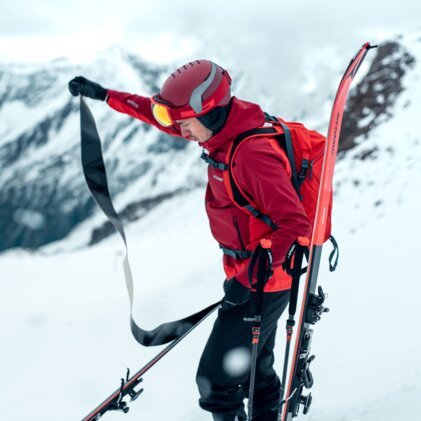
Synthetic nylon skins are robust, easy to care for and offer very good grip. This is ideal for beginners. Mixed skins and mohair skins are more suitable for advanced skiers and professionals. They glide smoother, but are also more sensitive and more expensive.
For climbing aids, 2-stage systems are ideal for beginners. You will only need 3-stage variants when you are climbing really steep slopes.
What other equipment do you need?
Before you tackle your first ski tour, you will of course need other suitable equipment in addition to your touring skis. You can also rent helmets, touring ski boots and numerous accessories from INTERSPORT Rent!
Safety equipment
Safety first, especially off-piste! Before you head into the backcountry, you should definitely be fit in terms of avalanche safety.
Indispensable are:
- Avalanche transceiver
- Avalanche shovel
- Probe
- Backpack with emergency equipment
In a beginner's ski touring course, you will also learn how to use safety equipment correctly. Always keep yourself informed about the current avalanche warning level!
How fit do you need to be for ski touring?
You don't have to be a marathon runner to get up a mountain on touring skis as a beginner. A solid basic level of fitness is enough to master the ascents in a relaxed manner.
Our tip: Start at a leisurely pace, find your own speed and allow yourself breaks. Ski touring is endurance training with a view and not a competition. If you still want to start ambitiously, perhaps our tips in the article "Fit for the slopes" will help you!
How important is experience on the slopes for your first ski tours?
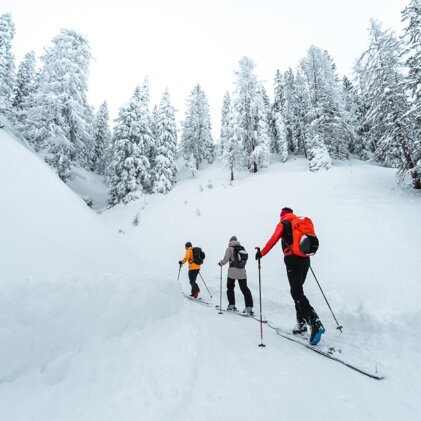
Experienced skiers have an advantage when touring. They know balance, technique and feel. But you can also start with little experience on the slopes: many ski resorts have their own ascent tracks for ski touring beginners. There you can practise walking with skins safely and improve step by step.
Once you have successfully mastered the first ascent tracks, you will find a large selection of different levels of difficulty in many ski touring areas. There is something for you as a ski touring beginner almost everywhere.
How do you get the most out of your ski tour?
Of course, a lot of ski touring depends on the right equipment - you are now well informed about this. Another factor that can make a huge difference is the right technique.
Do you also need expert advice on your ski touring technique? Here you go: we recommend our 10 best tips on how to improve your ski touring technique!
Frequently asked questions about touring skis for beginners
How difficult is ski touring for beginners really?
Ski touring sounds more strenuous than it is. If you have a solid basic level of fitness - from hiking, cycling or running, for example - you can start with beginner tours without any problems. The key is to consciously keep your pace low and take regular breaks. The movement is steady, easy on the joints and trains the legs, core and endurance.
What equipment do I need for my first ski tour?
The basic equipment includes touring skis for beginners with bindings, skins, poles, suitable ski touring boots and a rucksack with safety and avalanche equipment (transceiver, shovel, probe). It is also important to wear suitable, breathable clothing that wicks away sweat and keeps you warm. A helmet, gloves and goggles are just as important as drinks and a small snack.
What mistakes should beginners avoid when ski touring?
The most common mistake is to start out too ambitiously. Clothing that is too warm and a lack of breaks also quickly lead to exhaustion. Also pay attention to the weather and avalanche conditions. Plan your route in advance and never rely solely on digital tools. Start early enough to reach your destination before the early winter dawn.
Is a ski touring course worthwhile for beginners?
Yes, a course is the best way to learn technique and safety from scratch. Experienced guides will show you how to ascend efficiently, set kick turn steps, ski down correctly and recognise avalanche risks. You will also receive valuable tips on equipment and tour planning. Even a one-day course increases your routine enormously and ensures a relaxed introduction to ski touring.
INTERSPORT Rent tip
The RENTertainer recommends
Your first ski tour is done and you are completely thrilled? Then remember that even beginner touring skis need regular maintenance. You don't feel like doing the ski service yourself?
Then leave it to the experts! Our RENTertainers at over 800 INTERSPORT Rent locations worldwide will be happy to get your skis in top shape for you. If you prefer to rent the latest and best serviced equipment, you're also at the right place!
Related articles
You may also be interested in: